Why is Kiruna moving, and what can you see today?
Updated October 28, 2026 · 4 min read
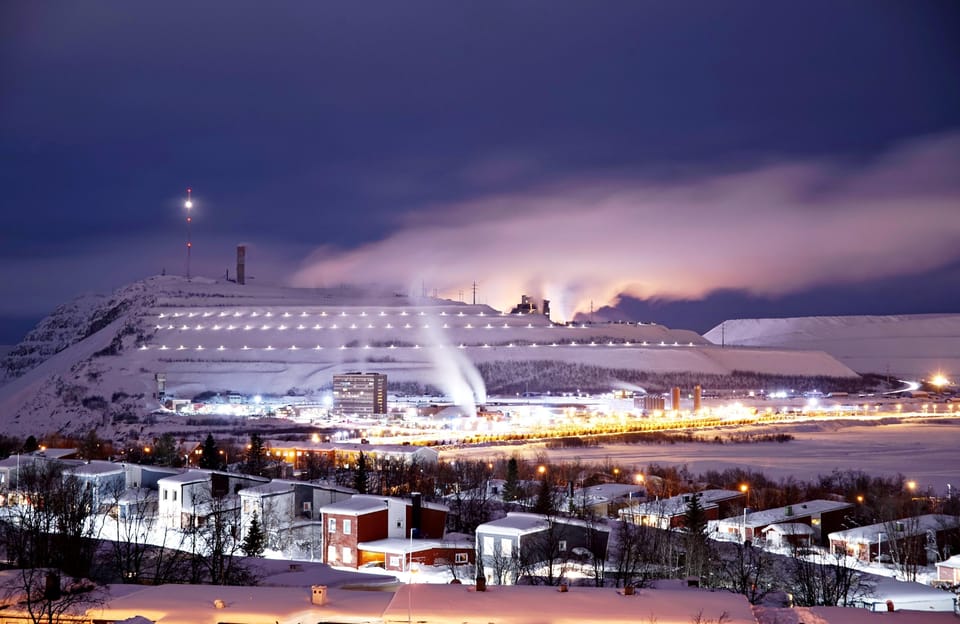
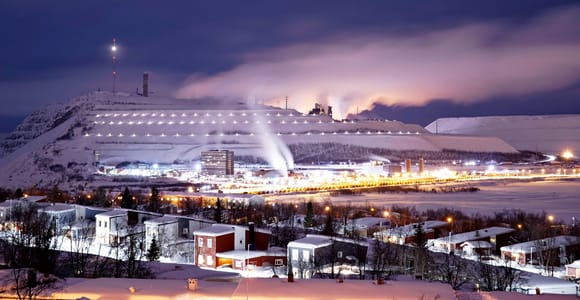
Kiruna is not being lifted and moved as one complete town. Mining-induced ground deformation is making parts of the old centre unsafe, so homes, streets and public buildings are being replaced, demolished or moved in stages to safer ground farther east. The result is unusual: you can walk through a functioning new centre while still seeing gaps and traces of the old one.
Start at the new centre
Begin around Kristallen, the circular town hall opened before the surrounding centre was complete. Its historic clock tower came from the former town hall, making the building a useful introduction to the whole project: Kiruna is preserving selected pieces while constructing a different urban layout.
The new centre was inaugurated in 2022. Shops, the visitor centre and civic buildings make it the practical starting point, not an architectural display detached from daily life. From here, look towards the mine mountain Kiirunavaara; the town exists because of the ore body, and the same mine is the reason for its relocation.
The church has already moved
Kiruna Church was transported in one piece on 19–20 August 2025. The building, more than 600 tonnes and about 40 metres wide, travelled roughly five kilometres to a site between the cemetery and the new centre. Its bell tower followed separately. Do not plan a visit to the former hill expecting the church to remain there.
At the new site, the church shows the most visible side of the transformation. At the old location, the absence tells the other half of the story. Kiruna Municipality’s city walk explains both the former centre and the buildings that were retained. Some areas change as work proceeds, so respect barriers and current signs.
Can you visit the mine?
Do not enter industrial areas independently. Mine access, when available, is through an authorised visitor tour and depends on current operations. The Kiruna experiences page is the safer place to check what can actually be booked. The city centre, church and public walking route can still explain the relocation without an underground visit.
Allow half a day if you enjoy planning, architecture and industrial history. If you only photograph the new square, the move can feel abstract; seeing both the new centre and the edge of the former one makes the scale understandable.